
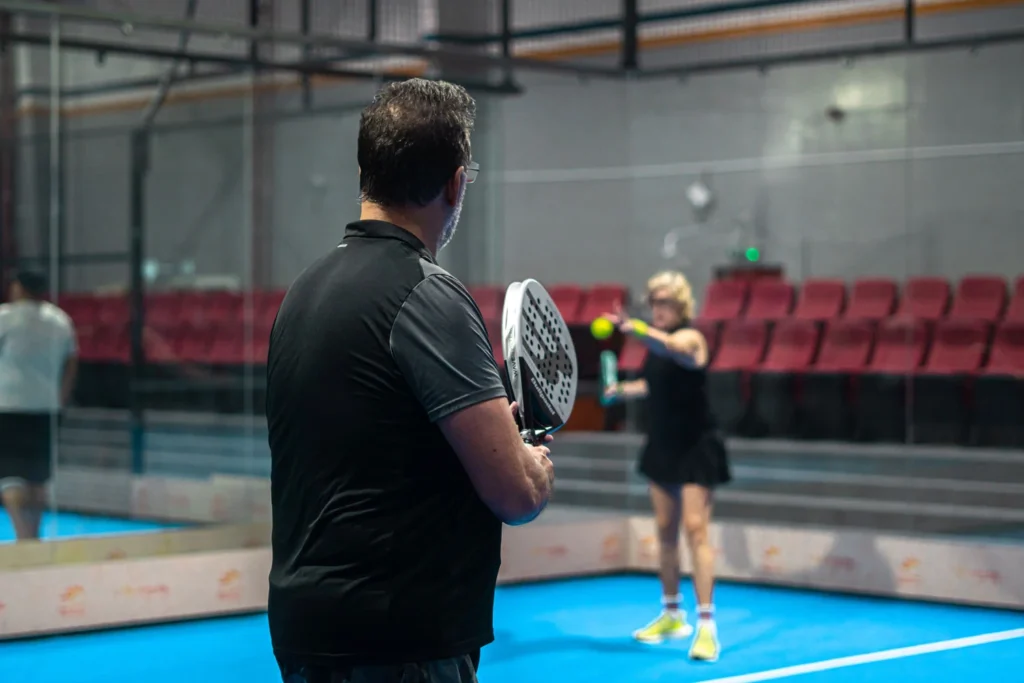
Social Benefits of Playing Padel
One of the most valuable aspects of padel is its strong social foundation. Unlike many individual sports, padel is played in doubles, which naturally promotes communication and teamwork.
Stronger Teamwork and Communication Skills
Because padel is played in pairs, success depends on coordination, strategy, and trust between partners. Players constantly communicate about positioning, tactics, and shot selection. At FM Padel Academy, our coaches emphasize teamwork development as a core part of training, helping players build strong on-court partnerships that often translate into improved communication skills off the court as well.
Building a Community Through Sport
Joining FM Padel Academy means becoming part of a growing and supportive padel community. Players regularly participate in training sessions, friendly matches, tournaments, and social events. This environment encourages networking, friendships, and long-term connections. For many players, padel becomes not just a sport but a social lifestyle.
Inclusive and Accessible for All Levels
Padel is easy to learn compared to many racket sports. Beginners can quickly enjoy rallies, which creates a welcoming environment for new players. At FM Padel Academy, our structured coaching programs ensure that players of all levels feel comfortable and supported from their first session to advanced competition.
Mental Benefits of Playing Padel
Padel is not only physically demanding but also mentally stimulating. The sport requires constant awareness, anticipation, and decision-making.
Improved Focus and Concentration
During a padel match, players must track the ball, anticipate opponents’ moves, adjust positioning, and communicate with their partner. This continuous engagement strengthens concentration and mental sharpness. At FM Padel Academy, our coaching sessions incorporate tactical training that enhances players’ ability to think strategically under pressure.
Stress Reduction and Emotional Balance
Physical activity is scientifically proven to reduce stress by releasing endorphins. A padel session provides a productive outlet for daily pressures. Many players report feeling mentally refreshed and more balanced after training. The supportive environment at FM Padel Academy further contributes to positive mental well-being.
Increased Confidence and Personal Growth
As players develop technical skills and tactical awareness, their confidence naturally grows. Achieving performance milestones, improving consistency, and competing in matches all contribute to higher self-esteem. Our experienced coaches at FM Padel Academy guide players through structured progressions, ensuring steady development and measurable improvement.
Enhanced Strategic Thinking
Padel requires intelligent shot selection, positioning awareness, and game planning. Players must constantly analyze situations and adjust tactics. This strategic aspect strengthens cognitive flexibility and decision-making skills, both on and off the court.
Physical Benefits of Playing Padel
Padel offers a comprehensive full-body workout while remaining relatively low impact compared to other high-intensity sports.
Cardiovascular Improvement
Padel involves continuous movement, short sprints, quick directional changes, and dynamic rallies. These elements significantly improve cardiovascular endurance. Regular training at FM Padel Academy supports heart health and increases overall stamina.
Muscle Strength and Endurance
The sport engages multiple muscle groups including legs, core, shoulders, arms, and back. Repeated strokes, volleys, and smashes contribute to improved muscular endurance and tone. Our coaches focus on proper technique to maximize performance while reducing injury risk.
Agility, Coordination, and Reflex Development
The fast pace of padel enhances reflexes and coordination. Players improve their balance and reaction time through regular drills and match play. At FM Padel Academy, structured training sessions are designed to progressively develop agility and court awareness.
Calorie Burn and Weight Management
A typical one-hour padel session can burn a significant number of calories depending on intensity. Combined with proper coaching and regular participation, padel supports healthy weight management and overall fitness improvement.
Lower Impact on Joints
Compared to sports that involve long-distance running or heavy physical contact, padel places less strain on joints. The smaller court size reduces excessive running while still maintaining high intensity. This makes padel suitable for a wide range of age groups.
What is the difference between padel and tennis?
When comparing padel vs tennis, the main differences are court size, equipment, and playing style.
Padel is played on a smaller enclosed court surrounded by glass walls, which are part of the game. Tennis is played on a larger open court without walls. Padel rackets are solid with no strings, while tennis rackets are strung. The serve in padel is underhand, making it easier for beginners to start rallies.
At FM Padel Academy, we often see former tennis players adapt quickly to padel. However, padel is generally easier for beginners because it allows longer rallies and requires less power to control the ball.
Is padel easier to learn than tennis?
Yes, for most beginners padel is easier to learn than tennis.
The smaller court, underhand serve, and use of walls make it easier to maintain rallies. New players can enjoy competitive games much faster compared to tennis, where technical serving and powerful groundstrokes take longer to master.
At FM Padel Academy, our structured coaching system helps beginners build confidence from their first session.
What is the difference between padel and pickleball?
When discussing padel vs pickleball, the biggest differences are court design, speed, and physical intensity.
Pickleball is played on a smaller open court with a plastic ball and lighter paddle. Padel is played inside an enclosed glass court where players can use the walls strategically. Padel rallies tend to be faster and more dynamic, requiring greater movement and tactical positioning.
Both sports are accessible, but padel offers a more strategic and physically engaging experience, especially at competitive levels.
What is the difference between padel and volleyball?
Padel and volleyball are completely different sports in structure and objectives.
Volleyball is a team sport played with six players per side and focuses on jumping, blocking, and spiking over a net. Padel is played in doubles on a racket court and focuses on shot precision, positioning, and teamwork.
While volleyball emphasizes vertical power and explosive jumping, padel emphasizes lateral movement, coordination, and strategic shot selection.
Is padel more physical than tennis?
Padel can be less physically demanding in terms of court coverage because the court is smaller. However, it requires quick reflexes, agility, and constant movement during rallies.
Tennis often involves longer sprints and more powerful strokes. Padel focuses more on positioning, teamwork, and controlled aggression.
At FM Padel Academy, our coaches design training sessions that improve endurance, agility, and technical efficiency to maximize performance safely.
Can tennis players switch easily to padel?
Yes, tennis players usually transition to padel quickly.
They already understand racket control, footwork, and match strategy. However, they must adapt to using the walls, playing more volleys, and relying more heavily on teamwork.
Our coaching team at FM Padel Academy specializes in helping tennis players refine their technique specifically for padel competition.
Is padel suitable for all ages?
Yes, padel is suitable for juniors, adults, and senior players.
Because it is lower impact compared to many sports, it reduces strain on joints while still offering strong cardiovascular and muscular benefits. This makes it ideal for long-term participation and consistent training.
At FM Padel Academy, we offer programs tailored to different age groups and skill levels.
Why is padel becoming more popular than other racket sports?
Padel is growing rapidly because it combines accessibility, social interaction, and competitive excitement.
The learning curve is shorter than tennis, the rallies are engaging, and it is always played in doubles which enhances the social experience. These factors make it attractive for both recreational players and competitive athletes.
FM Padel Academy continues to see increasing demand for structured padel coaching as more players discover these advantages.
Why Choose FM Padel Academy
At FM Padel Academy, our mission is to develop players technically, physically, and mentally in a professional and supportive environment. Our certified coaches focus on structured training programs tailored to beginners, intermediate players, and competitive athletes.
We believe that padel is more than a sport. It is a pathway to healthier living, stronger social connections, and continuous personal growth.
Whether your goal is to learn the basics, compete in tournaments, or simply stay active, FM Padel Academy provides the coaching expertise and positive atmosphere to help you succeed.